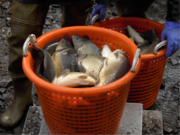
 There is no discussion: fish and shellfish are healthy food and the consumption of these tasty fish food products is increasing. However, natural stocks of fish, crustaceans and bivalves cannot sustain the ever increasing demands. The solution, therefore, has to come from an expansion of aquaculture. Here, Dr. Kurt Buchmann from the University of Copenhagen, Denmark explains some of Europe’s challenges, both solved and unsolved by IMAQUANIM, for a wide variety of aquaculture systems.
Ever increasing demands
Aquatic food products are tasty, of high nutritional value, and contain many elements that promote human health. These are the reasons for an annual increase in the intake of aquatic products all over the world which, at present, is some 17 kg per person per year. Natural stocks of fish, crustaceans and bivalves, however, do not have the capacity to cover the ever increasing demand for fish food set by a world population which has exceeded 6.6 billion people and which may reach more than 9 billions by the year 2050. Capture fisheries worldwide amounts to 92 million onnes; a huge amount of aquatic food products. However, despite an increasing fishing effort this catch cannot be further increased due to over-exploited fish stocks. The only solution to the problem, it seems, is the expansion of aquaculture.
Growth of aquaculture production
In contrast to capture fisheries the world aquaculture production, which at present amounts to some 52 million tonnes per year, increases 8.7 % per year. As a result, the Food and Agricultural Organisation (FAO) expects the world fish market to be dominated by aquaculture products within a few years only. The continued growth of the aquaculture sector, however, is faced with among others, animal health problems. The expected expansion of aquaculture requires a well-thought-through action plan based on a philosophy of sustainability aided by environmental-friendly technology. From a health control perspective the future goal must be to control or reduce the use of antibiotics, anthelminthics, disinfectants and other chemical substances. IMAQUANIM has paved the way to achieve this goal by pinpointing parts of the immune system that can be stimulated to provide fish and shellfish with the urgently-needed protection against diseases caused by bacteria, viruses and parasites.
Unity in variety
Aquaculture production systems deal with a multitude of different species, ranging from fish species as 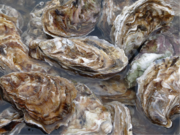 different as salmon, eel, sea bass, eabream, trout, carp and catfish to shellfish including mussels and oysters. Further, the technologies applied to culture all these different species show an equal range of variety. The challenge is to implement the results of IMAQUANIM in the diversity of existing as well as future aquaculture production systems. At present, the systems in practice range from ancient low-technology pond systems with a high outlet of waste material to modern high-technology and environment-friendly recirculation systems.
One-by-one
The question to solve is how to implement our improved knowledge of immune defense mechanisms of fish and shellfish into practical mmunoprophylactic measures in aquaculture systems as diverse as: 1) Freshwater fish ponds fed by natural water contaminated with pathogens, 2) Recirculated freshwater farms, 3) Land-based mariculture systems, 4) Recirculated seawater farms, 5) In-shore mariculture systems, 6) Off-shore mariculture net-pens, 7) Intensive line production of mussels and 8) Oyster beds. The implications of these diverse aquaculture systems for animal health are listed below.
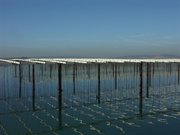 The modern production of bivalves is based on an intensification of production methods. The location of animals in the upper water-column may represent both challenges and assets. Although confronted with many pathogens, the oxygen conditions are better which may improve their immune status.
The future challenge True for all of the above-described aquaculture systems, a combination of improved management, improved breeding status (improved genetics), improved nutrition and last-but-not-least improved immuno-prophylactic strategies should lead to the development of a healthy aquaculture of the 21st century. IMAQUANIM has explored the biological background for effective immuno-prophylaxis, studying a wide range of fish and shellfish species in a variety of aquaculture systems. The precise description of genes and proteins important for protective immune responses has lead to the development of invaluable knowledge and tools for future aquaculture research worldwide. The results will fuel the development of more sustainable aquaculture systems. Implementation at fish-farm level will benefit European aquaculture. Independently of the fish or shellfish species cultured and independent of the system applied to culture these animals, immuno-stimulation and vaccination will help sustain the task of aquaculture to feed the ever-growing human population.
